
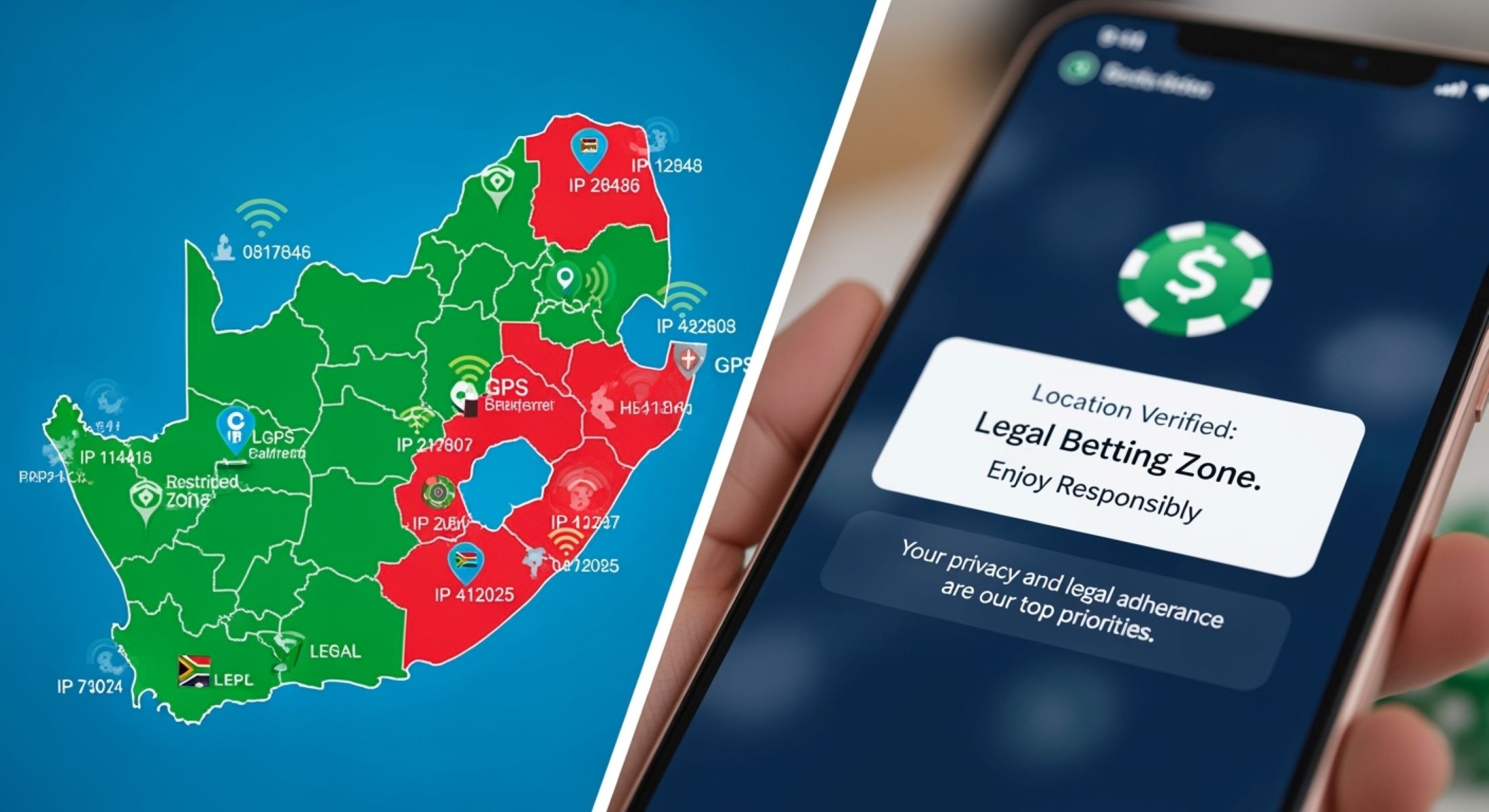
Ever wondered why gambling sites always seem to know exactly where you are? Especially in South Africa, location tracking is not just a fancy feature—it’s a legal necessity. Online gambling is heavily regulated here, and sites need to ensure players are physically located in permitted areas to comply with the law. So, how exactly do these sites pinpoint your location? And what does it mean for your privacy? Let’s dive in.
The Legal Landscape of Online Gambling in South Africa
Before diving into how gambling sites track your location, it’s essential to understand the legal environment they operate within. Online gambling in South Africa is tightly controlled, and its regulation stems from both national and provincial levels of government. The cornerstone of this regulation is the National Gambling Act, which sets the legal framework for gambling activity across the country. However, provinces have the autonomy to implement and enforce their own gambling rules, which means the legality and availability of online gambling services can vary significantly depending on where you’re located.
The law is clear: only licensed operators are permitted to offer gambling services to South African residents. These licenses are issued by provincial gambling boards, and without one, an operator is considered illegal. The licensing process is rigorous and includes checks on financial stability, fair gaming practices, and—importantly—location verification mechanisms. This ensures that only legitimate and accountable companies can provide services, protecting players from fraudulent or unregulated operators that might otherwise exploit legal loopholes.
Another critical aspect of South African gambling law is the requirement that players must be physically present within South Africa’s borders—or within a specific licensed province—to participate legally. This stipulation is not just about jurisdiction; it’s about ensuring that all activity happens within a legally controlled and taxable environment. Cross-border or offshore online gambling is largely restricted, and South African residents accessing these sites are technically engaging in illegal gambling activity, even if the site is based in another country.
Because of these strict legal frameworks, gambling sites operating in South Africa must employ robust methods to verify a user’s physical location before allowing access to their services. This is not merely a security measure but a legal requirement that helps platforms comply with both national law and provincial mandates. By confirming your location, these sites avoid legal penalties and ensure that users are participating in gambling activities that are permitted and regulated in their specific area.
How Gambling Sites Detect Your Location: The Basics
The moment you visit a gambling site or open a mobile betting app, it immediately begins trying to determine where you are. This isn’t about invading your privacy—it’s about complying with gambling laws. In South Africa, location verification is especially critical due to strict provincial and national regulations. Here’s a detailed list of how gambling sites typically track your location:
- Gambling sites use your IP address to get an initial idea of your location. This is one of the simplest and most common methods. Your IP address is automatically assigned by your internet service provider and gives clues about your general area, such as your country, city, or even neighborhood. However, it’s not always 100% accurate and can sometimes point to your ISP’s location rather than your exact whereabouts. Also, users who rely on VPNs or proxies can spoof their IP location, which is why many gambling platforms implement VPN detection systems to block access when IP manipulation is suspected.
- Devices such as smartphones, tablets, and some laptops are equipped with GPS technology, which offers highly precise geolocation data. When you access a gambling platform via a mobile app or browser, it may ask for permission to use your device’s location services. If you grant access, it will retrieve your exact coordinates using GPS satellites. This is often the most accurate way to determine your real-time location and is frequently used by apps to ensure you’re in a legally permitted area. Without enabling this permission, users may be restricted from playing or even blocked entirely.
- If you’re connected to the internet via a Wi-Fi network, your device can be located based on the network itself. Public databases exist that store the physical locations of known Wi-Fi routers and access points. Gambling websites can reference these databases to match your Wi-Fi connection with a geographic location. This method is especially useful on desktop computers or laptops without GPS functionality, allowing the platform to estimate your position even if you’re indoors or GPS is unavailable. The more precise the Wi-Fi mapping in your area, the more accurate this method will be.
- On mobile devices, especially smartphones, gambling platforms can use data from surrounding cell towers to triangulate your location. When your phone connects to multiple cell towers at once, the system can calculate your position based on the strength and timing of the signals. This method is particularly useful when GPS isn’t enabled or available. While not as accurate as GPS, cell tower triangulation still provides a fairly reliable location estimate and can be used as a backup verification method by gambling operators when other options fail.
- Many gambling sites analyze the payment methods you use to check whether they match your claimed location. For instance, if you attempt to fund your gambling account using a credit card issued in a different country, or through an international bank account, the site might flag this as suspicious. Some platforms may even block transactions or ask for additional verification. This process not only helps verify your geographical region but also supports anti-fraud and anti-money laundering policies by making sure that financial transactions are legal and traceable.
IP Address Detection: The Most Common Method
| Feature | Description | Accuracy | Strengths | Weaknesses |
| Detection Method | Uses your device’s internet-assigned IP address to estimate geographic location | City-level (sometimes region) | Quick and automatic | Can be fooled by VPNs or proxies |
| User Involvement | No need for user permission or interaction | Passive | Seamless and immediate | Less transparent for users |
| Device Compatibility | Works on any internet-connected device (PC, mobile, tablet, etc.) | Universal | Broad compatibility | Doesn’t verify actual physical presence |
| Legal Use in Gambling | Common first step in verifying a player’s jurisdiction | Legal compliance check | Helps restrict users from unauthorized areas | Not always precise enough for legal standards |
| Bypass Risk | Vulnerable to spoofing using VPNs or proxies | High risk | Easy to monitor for high-level fraud attempts | May require backup verification like GPS |
GPS and Device Location Services
When it comes to accurately determining a user’s physical location, GPS and device-based location services are considered the most reliable tools available to gambling sites. Unlike other methods that rely on estimations, GPS provides precise, real-time data by connecting to a network of satellites that triangulate your position. This system is built into most smartphones, tablets, and modern laptops, making it widely accessible. Gambling platforms often prompt users to grant location access when opening an app or website, particularly when local regulations require proof of presence within a licensed jurisdiction.
The process begins the moment a user opens a gambling app or website that requests location access. If granted, the site can pull direct data from the device’s GPS chip, which can determine your position within a few meters. This level of accuracy is invaluable for online gambling operators, especially in regions like South Africa where gambling is allowed only within specific provincial or national boundaries. GPS helps verify not just whether a user is in South Africa, but exactly where within the country they are—something crucial when gambling laws vary from one province to another.
Unlike IP address tracking, which can be vague and often misrepresent a user’s actual location, GPS delivers exact coordinates, allowing gambling operators to be fully compliant with legal obligations. It also prevents players from attempting to access services from restricted areas by spoofing their location using proxies or VPNs. In essence, GPS-based tracking gives operators legal certainty and helps them enforce territorial restrictions with confidence. For this reason, many regulated platforms will not allow access to games or financial transactions unless GPS location is verified first.
However, this method isn’t without its drawbacks. Users must willingly enable location services on their device and approve the website or app’s request for access. Some individuals may be hesitant to grant this permission due to privacy concerns. Furthermore, GPS performance can be hindered indoors, in areas with poor satellite visibility, or when battery-saving settings limit location accuracy. Still, despite these limitations, GPS remains the gold standard in geolocation for online gambling, offering unmatched precision and regulatory assurance.
Wi-Fi and Network Information
Gambling platforms often rely on Wi-Fi and network data to estimate a user’s location when more direct methods like GPS are unavailable or blocked. This method is especially important for desktop and laptop users who may not have GPS-enabled devices. It offers a practical balance between ease of access and moderate accuracy, making it one of the most common fallback options for geolocation. Here’s a detailed breakdown of how this method works and what makes it effective—or limited—in different scenarios:
- Gambling sites can identify which Wi-Fi network your device is connected to. Every router has a unique identifier known as a MAC address, and that address can be linked to a physical location.
- Large databases, maintained by tech companies like Google, Apple, and Mozilla, store millions of known Wi-Fi access points with their corresponding GPS coordinates. These databases are created through crowd-sourced data collected from smartphones and other mobile devices that scan for networks as people move around.
- When you connect to a Wi-Fi network, your device communicates with that router, and the website or gambling app you’re using can collect details such as the network name (SSID) and MAC address.
- The platform then compares this information against the Wi-Fi geolocation database. If your network is listed, your approximate physical location can be determined even if GPS is turned off.
- In densely populated urban areas, where Wi-Fi networks are tightly clustered and frequently mapped, this method can offer surprisingly high accuracy—sometimes narrowing your position down to within 20 to 30 meters.
- In suburban or rural areas, or if you’re using a private or newly installed network that hasn’t yet been indexed, the method becomes less reliable. In such cases, your location might be estimated based on nearby, known Wi-Fi access points, which could lead to inaccuracies.
- This method doesn’t typically require explicit user permission in the way that GPS or Bluetooth tracking does. Most browsers allow websites to access network-related data unless the user has specifically blocked such permissions.
- Because it functions without directly tapping into your GPS or requiring manual input, Wi-Fi-based geolocation is particularly effective on laptops and desktop computers where GPS chips are usually absent.
- On mobile devices, this method is often used in combination with GPS and cellular data to improve location accuracy, especially when indoors where satellite signals are weak.
- One advantage is that this method doesn’t consume as much battery as GPS. It’s passive and always running in the background, which is why many gambling apps prefer to use it as part of a hybrid geolocation model.
Cell Tower Triangulation for Mobile Users
| Feature | Description | Accuracy Level | Advantages | Limitations |
| How it works | Measures signal strength from 3+ nearby cell towers | Medium (urban), Low (rural) | Does not require GPS or user permission | Depends on tower density and network coverage |
| Device requirement | Works on mobile phones connected to cellular networks | Medium | Useful when GPS is turned off | Cannot pinpoint exact address or coordinates |
| Privacy impact | Passive collection—less intrusive | Medium | Background operation without user intervention | Users may be unaware it’s being used |
| Reliability | More reliable in cities with dense infrastructure | Varies | Complements other location data sources | Poor performance in remote or tower-sparse locations |
| Use in gambling compliance | Helps verify mobile users in regulated jurisdictions | Medium | Aids in location confirmation without full GPS | Not always enough alone for legal compliance |
Payment Method Verification
One of the more subtle yet powerful tools gambling sites use to determine a player’s location is payment method verification. While it might not be the first thing that comes to mind when thinking about geolocation, financial details are a critical layer of user validation. When you register or deposit funds on a gambling platform, the site often checks whether your credit card, debit card, bank account, e-wallet, or other payment method originates from the same country you claim to be playing from. If there’s a mismatch—say, you claim to be in South Africa but attempt to use a UK-issued credit card—that’s a red flag for the platform.
This verification technique serves two main purposes: fraud prevention and regulatory compliance. For licensed gambling operators, especially those bound by national or provincial laws, accepting payments from jurisdictions where gambling may be illegal or restricted could expose them to heavy penalties. Additionally, matching payment sources to physical locations helps platforms confirm that users are not using VPNs or fake identities to bypass regional blocks. Payment processors and banks often embed location data within the account metadata, and gambling systems can access this data through APIs or third-party verification services.
For example, a legal online gambling site operating in South Africa will typically only accept deposits from South African-issued payment instruments. If a user tries to deposit using a U.S.-based Visa or a European PayPal account, the transaction may be blocked automatically or flagged for review. In some cases, users may be asked to verify the origin of their funds, provide local proof of residence, or use alternate payment methods that comply with local laws. This ensures that the gambling activity remains within legally permissible boundaries.
Importantly, payment method verification doesn’t just serve the platform—it also protects users. It reduces the risk of account hijacking, identity theft, and financial fraud by making sure only verified users can transact. For governments and regulators, it’s also a way to ensure that only residents within approved areas are placing bets, which ties directly into efforts to control underage gambling, money laundering, and tax evasion. In short, your bank card or e-wallet doesn’t just move money—it quietly tells the gambling site a lot about where you really are.